Veneers
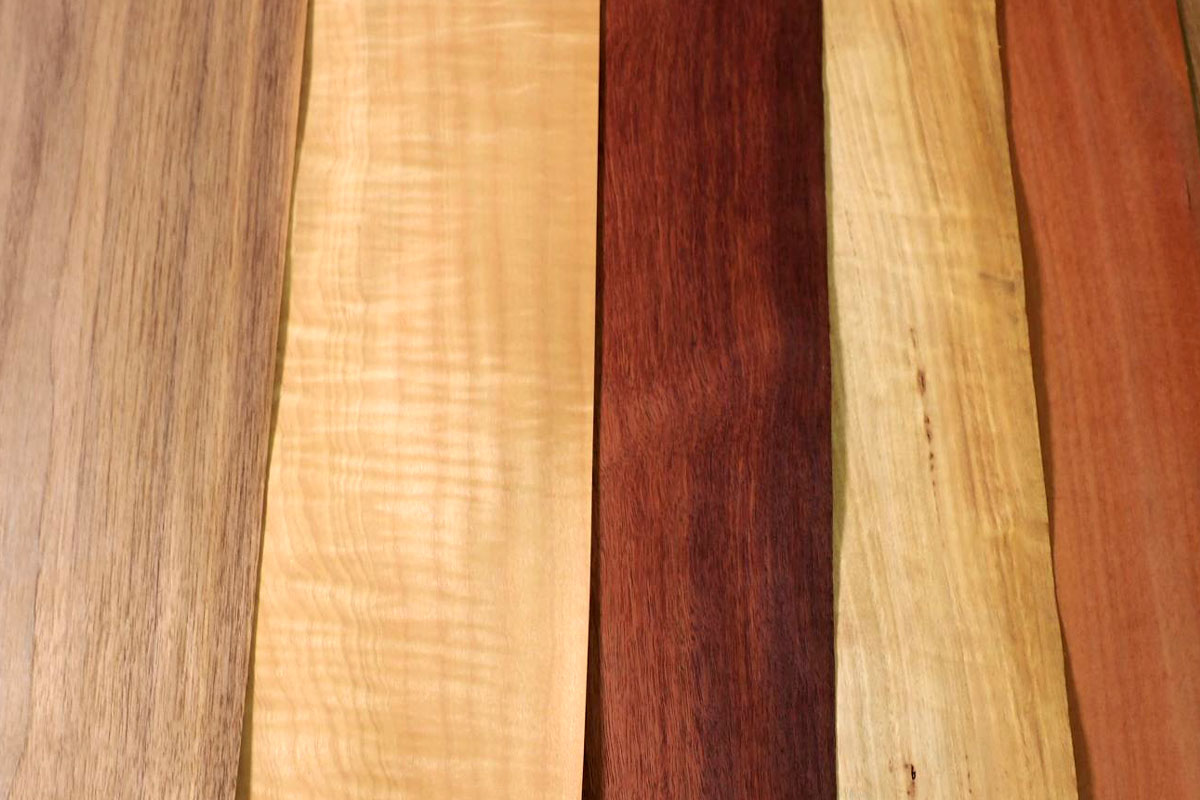
Veneer is a thin sheet of natural wood or engineered material applied to a substrate to create a surface that has the appearance of solid wood. It’s commonly used in furniture, cabinetry, and decorative interiors. Here’s a detailed overview:
What is Veneer?
- Material: Thin slices of natural wood, typically less than 3 mm thick.
- Substrate: Applied to plywood, MDF (Medium-Density Fiberboard), particleboard, or blockboard.
- Purpose: Provides the look and feel of solid wood at a lower cost and with greater stability.
Types of Veneers
- Based on Material:
- Natural Veneer: Sliced directly from logs, showcasing the unique grain and texture of the wood species (e.g., teak, walnut, oak, mahogany).
- Engineered Veneer (Reconstituted Veneer): Made by reconstructing and dyeing natural wood fibers to achieve uniform patterns and colors.
- Based on Production Technique:
- Sliced Veneer: Thin sheets are sliced off the log using a sharp blade.
- Rotary-Cut Veneer: The log is rotated and peeled, producing a continuous sheet.
- Quarter-Cut Veneer: Created by slicing the log in quarters, yielding a straight grain appearance.
- Crown-Cut Veneer: Made by slicing through the center of the log, producing a more curved, flame-like grain pattern.
- Based on Finish:
- Raw Veneer: Requires polishing or staining.
- Pre-finished Veneer: Comes with a polished or coated surface, ready to use.
Common Sizes
- Standard Sizes: Veneers are often available in 4 feet x 8 feet (1220mm x 2440mm).
- Custom Sizes: Can be ordered based on specific project requirements.
Advantages of Veneers
- Aesthetic Appeal: Offers the appearance of expensive wood species at a fraction of the cost.
- Eco-Friendly: Requires less wood than solid lumber, conserving natural resources.
- Versatility: Can be applied to various substrates for diverse applications.
- Stability: Less prone to warping or cracking compared to solid wood.
- Cost-Effective: Combines premium wood aesthetics with affordability.
Disadvantages
- Durability: More susceptible to scratches and dents compared to solid wood.
- Water Sensitivity: Prolonged exposure to moisture can cause veneers to peel or warp.
- Repair Limitations: Cannot be sanded or refinished as extensively as solid wood.
Applications of Veneers
- Furniture: Tables, chairs, desks, and storage units.
- Cabinetry: Kitchen cabinets, wardrobes, and drawers.
- Interior Design: Wall paneling, ceiling cladding, and decorative accents.
- Doors: Flush doors and decorative entrance doors.
- Flooring: In high-end flooring solutions (veneer-layered engineered wood).
Maintenance Tips
- Cleaning: Use a soft, damp cloth and avoid abrasive cleaners.
- Protective Finish: Apply varnish or lacquer to protect against moisture and scratches.
- Avoid Excessive Moisture: Prevent water spills and maintain a stable humidity level.
- Regular Polishing: Enhances the veneer’s shine and durability.
Differences Between Veneers and Laminates
| Feature | Veneer | Laminate |
|---|---|---|
| Material | Thin slices of real wood | Synthetic material |
| Appearance | Natural and unique | Uniform and artificial |
| Durability | Less scratch-resistant | Highly durable and scratch-proof |
| Cost | Higher | Lower |
| Maintenance | Requires careful handling | Easy to maintain |
Veneers are ideal for those looking for a premium, natural wood finish in their interiors. If you’d like guidance on selecting a type or applying veneer, For more details Contact Us